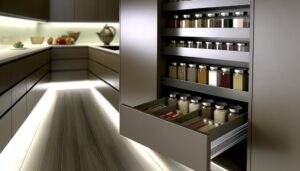
As you consider renovating your kitchen to better suit your later years, it’s vital to concentrate on features that not only improve comfort but also guarantee security. Picture lowering your kitchen counter with a straightforward button press, or effortlessly accessing spices from a slide-out drawer. These are not just conveniences; they are significant changes that make your kitchen a safer, more reachable area. But how do these features blend into the overall appearance of your home? And what about the other aspects like flooring and lighting? Let’s examine how these ergonomic designs can redefine your cooking area.
Key Takeaways
- Install adjustable counters with powered height mechanisms for safe and comfortable cooking.
- Equip cupboards with pull-out drawers and adjustable shelves for easy access and organisation.
- Use slip-resistant flooring materials to enhance safety and reduce fall risks.
- Incorporate touchless tap technology to minimise effort and improve hygiene.
- Enhance visibility with strategically placed lighting and automatic sensor adjustments.
Adjustable Countertop Heights
Adjustable worktop heights can significantly enhance your comfort and safety in the kitchen as you age. With powered mechanisms, you can easily adjust the height of your kitchen counters at the press of a button. Imagine not having to strain your back reaching up or bending down too low while you’re preparing meals or tidying up. It’s not just about convenience; it’s about maintaining your independence and physical well-being.
These adjustable systems often come equipped with height memory settings, allowing you to save your preferred counter height. This means you don’t have to fiddle with controls every time you use the kitchen. You just set it once to your optimal height, and with one click, it adjusts right back to where you like it each time you start cooking.
Think about how this could transform your kitchen time into a more enjoyable experience. No more discomfort from counters that are too high or too low. You’ll have the freedom to set it exactly right for you, reducing the risk of injury and making your kitchen a safer, more accessible place as your needs change.
Simple-Access Storage Solutions
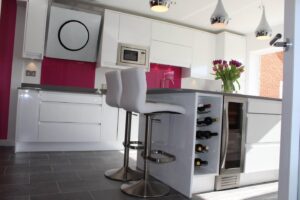 As you age, reaching into deep cupboards can become a challenge. Pull-out cupboard drawers can be a game-changer, allowing you to access pots, pans, and other necessities with ease.
Additionally, adjustable shelf heights help you customise storage to your needs, making items easier to grab.
Pull-Out Cabinet Drawers
Pull-out cabinet drawers can revolutionise your kitchen storage, making it easier to reach items without straining. With these drawers, you’ll find that everything has a place and you can access whatever you need without having to rummage through deep cabinets. Drawer dividers further enhance this organisation, allowing you to separate utensils, spices, and other small items so they’re always at your fingertips.
Moreover, opting for models with reinforced tracks ensures durability and a smoother glide every time you pull them out. You won’t have to worry about wear and tear from regular use. This setup not only maximises your space but also minimises the physical effort needed to navigate your kitchen as you age.
Adjustable Shelf Heights
You’ll appreciate how adjustable shelf heights in your kitchen cabinets can simplify grabbing dishes and ingredients. As you age, reaching high or bending low becomes cumbersome. With shelves that adjust, you can position your most-used items at the most comfortable level for you, reducing strain and enhancing safety.
Choosing the right shelf materials is crucial for longevity and ease of use. Opt for sturdy, lightweight options like laminated composite or metal that can support weight without sagging.
For installation, consider hiring a professional to ensure that the mechanisms are correctly fitted and operate smoothly. They’ll provide valuable tips on maintaining the tracks and brackets, ensuring your adjustable shelves remain functional and reliable for years to come.
Slip-Resistant Flooring Options
As you consider upgrading your kitchen, it’s crucial to focus on slip-resistant flooring options that ensure safety and ease of movement.
You’ll need to choose materials that not only prevent slips but are also easy to maintain and durable over time.
Additionally, don’t forget the importance of aesthetics; the right flooring should both be functional and match your home’s style.
Choosing Appropriate Materials
When selecting flooring materials for your kitchen, opt for slip-resistant options to enhance safety and comfort as you age. Material resilience is key, ensuring that your choice withstands the daily wear and tear without becoming a hazard.
Consider texture choices carefully; options like textured vinyl or soft-glazed tiles can provide the necessary grip, reducing the risk of slips and falls. These materials not only offer safety but also come in a variety of styles and colours, allowing you to maintain a pleasing aesthetic in your kitchen.
Don’t overlook the importance of how these materials feel underfoot. Comfort is crucial, and the right texture can make a significant difference in your daily kitchen interactions.
Maintenance and Durability
While selecting non-slip flooring ensures safety, it’s also important to consider how these materials hold up over time and under regular use. You’ll want floors that resist damage and wearing, maintaining their texture to prevent slips as they age. Look for options incorporating smart technology, which can alert you to areas where slips are more likely or require maintenance. These floors often integrate sensors that monitor surface conditions, enhancing safety through proactive alerts.
Additionally, opt for materials that promote energy efficiency. Some modern flooring types help insulate your kitchen, reducing heating costs and making your space more sustainable. With these choices, you’re not just investing in immediate safety but also in long-term durability and cost-effectiveness.
Design and Aesthetics
Choosing the right slip-resistant flooring not only enhances safety but also complements the aesthetic appeal of your kitchen. You’ll want to consider options that merge functionality with style. For instance, using colour contrasts can markedly improve visibility and safety, making it easier for you to discern different areas of your kitchen. Opt for darker mats or tiles against a lighter floor to achieve this effect without sacrificing thematic unity.
Additionally, maintaining thematic unity through your flooring choice ensures that the kitchen doesn’t just feel safe; it feels like it’s a part of your home. Select textures and patterns that resonate with your overall home decor to create a seamless transition from one room to another, enhancing both the beauty and practicality of your space.
Touchless Tap Technology
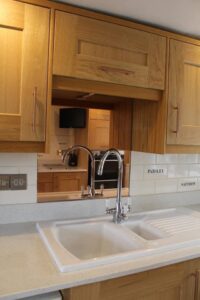 Touchless tap technology allows you to activate the flow of water without any physical contact, enhancing convenience and hygiene in your kitchen. With the heightened sensor sensitivity, you don’t have to fumble around; a simple hand movement near the tap triggers the water flow efficiently. This feature is particularly valuable as it minimises the struggle with handles that can be tough on arthritic hands.
The installation process for these taps is straightforward. Typically, it involves setting up a sensor and connecting a few hoses, which most plumbers can handle quickly and without disrupting your daily routine. You might worry about the need for frequent battery changes, but many models come with energy-efficient designs that ensure long-lasting battery life, so you’re not constantly maintaining it.
Additionally, the sleek design of touchless taps contributes to a modern kitchen aesthetic while providing practical benefits. They help reduce the spread of germs since you aren’t touching potentially contaminated surfaces. Whether you’re rinsing vegetables or cleaning up after a meal, the ease and sanitation of a touchless tap can significantly enhance your kitchen experience, making it a must-have feature in the home of any ageing homeowner.
Improved Illumination Concepts
After considering touchless tap technology, another important update for ageing homeowners is enhanced lighting designs that improve visibility and safety in the kitchen. Optimising your kitchen’s lighting isn’t just about adding more bulbs. It’s about smart placement and smarter technology. Let’s delve into how you can make these changes work for you.
Firstly, consider installing lights with smart sensors that automatically adjust based on the time of day and the amount of natural light in the room. This means you won’t have to fumble for a switch or deal with dim lighting during overcast days. The lights brighten as the natural light wanes, ensuring consistent visibility in your workspace.
Additionally, using lights to create colour contrast can significantly aid in distinguishing different areas and items. For instance, under-cabinet lighting can help highlight the edges of your worktops, reducing the risk of spills or mishaps. Opt for LED strips that offer a changeable colour spectrum; not only do they provide excellent visibility, but they can also be adjusted to a warmer tone that’s easier on your eyes.
These lighting upgrades not only enhance safety but also bring a modern touch to your kitchen, ensuring it’s a comfortable and functional space as you age.
Safe Appliance Placement
Strategically placing your appliances can significantly reduce strain and increase safety in your kitchen. When you’re redesigning your space, think about creating zones where you group similar appliances together. This appliance grouping method minimises the need to move around too much while cooking, which can be a lifesaver as you age. For instance, keeping your microwave and toaster near each other and close to where you prepare breakfast can make your mornings smoother and safer.
You’ll also want to consider the height at which appliances are installed. Ideally, heavy items like dishwashers and ovens should be positioned at mid-level to avoid bending down or reaching up. This placement can prevent back strain and reduce the risk of accidents involving heavy lifting or awkward bending.
Don’t overlook the details like colour coded knobs on stoves and ovens. These can be a game-changer for maintaining safety and ease of use. Colour coding helps you immediately identify which knobs control which burners or oven functions, reducing mistakes and enhancing usability. It’s a simple change that can make a big difference in preventing burns or other kitchen mishaps as your eyesight changes with age.
Comfortable Seating Areas
Incorporating comfortable seating areas in your kitchen can drastically enhance your enjoyment and accessibility as you age. As mobility might become more challenging, having places to sit comfortably while you chop vegetables or wait for the kettle to boil is a game-changer. You’ll find that swivel stools are particularly handy. They allow you to turn easily without straining your back or hips, making it simpler to engage with others in the room or switch tasks without getting up.
Consider installing a kitchen island with a built-in swivel stool area. This setup not only maximises space but also supports your independence in the kitchen. Additionally, look into integrating cushioned benches along one wall or in a breakfast nook. These benches offer a comfortable, stable place to sit, reducing the pressure on your joints compared to harder chairs. They also provide ample seating for family gatherings, so you’re part of every moment.
Choose cushions with high-density foam to ensure they don’t sag over time and maintain their supportive properties. Opt for cover materials that are easy to clean and maintain, yet soft to the touch. With these features in place, your kitchen will be a welcoming spot for both cooking and socialising, tailored to your evolving needs.
Regularly Asked Queries
How Do Ergonomic Features Impact Home Resale Value?
Ergonomic features in a home can significantly boost its resale value by enhancing market appeal. They cater to a broader range of buyer demographics, including those with mobility issues or ageing homeowners.
If you’re considering selling, incorporating such features might help attract more buyers who value comfort and accessibility, potentially increasing the number of offers you receive and allowing you to sell at a better price.
Are There Tax Benefits for Installing Ergonomic Kitchen Features?
Yes, you might find tax benefits when installing ergonomic features in your kitchen. Tax incentives often exist for home improvements that increase accessibility, especially for seniors or those with disabilities.
Check the IRS guidelines or consult a tax professional to understand specific deduction qualifications. These incentives can help offset costs and make these upgrades more financially manageable, ensuring your kitchen is both comfortable and potentially more valuable for resale.
What Is the Average Cost of an Ergonomic Kitchen Remodel?
When you’re planning a kitchen renovation, budget planning is essential. The average cost can vary widely, typically ranging from $20,000 to $50,000, depending on your material choices and the extent of the changes.
It’s wise to consider both functionality and aesthetics, ensuring you’re selecting materials that not only look good but also meet your needs. Always obtain multiple quotes and consider long-term benefits when establishing your budget.
How Long Does It Typically Take to Install These Features?
You’re looking at about 1 to 4 weeks for the installation of these features, depending on the complexity and extent of the modifications.
It’s wise to consult professionals for recommendations and ensure your installation scheduling is clear. They’ll help streamline the process, reducing downtime in your kitchen.
Make sure you’re prepared for a bit of disruption, but remember, the end result will tailor your space to better suit your needs.
Can Ergonomic Features Be Added to Rental Properties?
Yes, you can add ergonomic features to rental properties, but you’ll need your landlord’s cooperation. Discuss the changes you’re considering and how they might increase the property’s value or appeal.
It’s likely that you’ll need to negotiate lease modifications to include these upgrades. Ensure everything’s documented in writing to protect both parties. Remember, some landlords might require you to revert the modifications when your lease ends.
Summary
You’ve explored some top ergonomic features for making a kitchen safer and more accessible for ageing homeowners.
By installing adjustable countertops, easy-access storage, slip-resistant floors, and touchless faucets, you’re enhancing both safety and convenience.
Upgrading lighting and carefully placing appliances boost visibility and ease of use, while comfortable seating areas invite relaxation.
These adjustments not only modernise the kitchen but also ensure it’s a welcoming space for years to come.