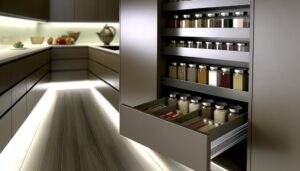
When you’re planning your custom kitchen design, integrating energy-efficient appliances isn’t just about picking the trendiest options; it’s about smart, sustainable choices. Start by assessing your kitchen’s layout to accommodate appliances that maximise energy efficiency, such as refrigerators and dishwashers with high Energy Star ratings. But how do you match these high-performing appliances with your unique design without compromising on style or functionality? This balance is crucial, and the next steps involve understanding which appliances offer the best efficiency without sacrificing the custom aesthetic you’re aiming for. Stay tuned, as we explore how to seamlessly blend these elements to achieve both style and sustainability.
Key Points
- Choose appliances with high Energy Star ratings tailored to suit custom kitchen designs.
- Consider induction hobs and energy-efficient ovens to enhance cooking effectiveness.
- Integrate smart technology for remote monitoring and energy control in appliances.
- Plan the kitchen layout to maximize appliance positioning for energy saving.
- Utilize LED lighting and smart sensors to enhance energy efficiency and kitchen atmosphere.
Assessing Your Custom Kitchen Layout
Before integrating energy-efficient appliances, you need to carefully assess your kitchen’s layout to ensure optimal placement and functionality. Space optimisation is crucial in achieving a balance between aesthetic appeal and practicality. You’ll want to consider the flow of movement within the kitchen. Is there enough room between the counter and the island for easy manoeuvring? Can drawers and cupboards open without obstruction?
Material selection also plays a significant role. Opt for materials that not only complement the design but are durable and easy to maintain. This ensures your kitchen remains timeless and functional, reducing the need for frequent updates.
Next, think about the placement of appliances in relation to each other. You don’t want your dishwasher miles away from your sink, or your oven creating a heat zone near your refrigerator. The idea is to create a harmonious environment that reduces energy consumption and enhances your cooking experience.
Lastly, consider the lighting. Natural light is best, but where that’s not feasible, choose energy-efficient LED options that provide good visibility without excessive power use. This holistic approach to kitchen layout assessment ensures that when you finally integrate those appliances, they perform efficiently in a well-organised space.
Selecting Energy-Efficient Fridges
When selecting an energy-efficient fridge, it’s important to consider both its Energy Star rating and size to ensure it meets your requirements without wasting power. The Energy Star rating indicates how much electricity the fridge uses and how it compares to others on the market. Choosing a model that excels in energy efficiency can significantly reduce your electricity bills.
Fridge placement also plays a crucial role in energy conservation. You should position your fridge away from heat sources such as cookers or direct sunlight, as these can make it work harder to maintain its cool temperature, using more energy in the process. Make sure there’s enough space around it for proper air circulation; this improves its cooling efficiency and extends its lifespan.
The cooling technology used in your fridge is equally important. Modern fridges often have advanced cooling systems that are more energy-efficient than older models. Look for features like inverter technology, which can adjust the compressor speed based on the load requirements. This not only saves energy but also helps keep your food fresher for longer by maintaining more even temperatures.
Selecting Low-Energy Ovens
When you’re choosing a low-energy oven, it’s important to grasp oven energy ratings and investigate efficient cooking technologies. These ratings assist you in figuring out how much energy the oven uses, allowing you to make a more informed decision.
Selecting models with advanced technologies can notably lessen your kitchen’s energy usage.
Oven Energy Ratings
Selecting an oven with a high energy rating can significantly reduce your kitchen’s electricity usage. When you’re choosing an oven, consider not just the energy rating, but also how oven placement and insulation impacts efficiency.
Ovens positioned away from windows and external walls tend to retain heat better and operate more efficiently. Proper insulation in and around the oven compartment also helps, as it minimises heat loss, ensuring that more energy goes towards cooking rather than heating the surrounding air.
You’ll find that these factors contribute to lower energy consumption and reduced utility bills. So, while the energy sticker is a good starting point, don’t overlook the importance of installation and positioning in your kitchen’s design.
Efficient Cooking Technologies
You’ll often find that choosing low-energy ovens equipped with efficient cooking technologies can drastically cut down your energy use and costs. Among the most innovative options are solar cookers, which harness the sun’s energy, making them incredibly cost-effective and sustainable for your bespoke kitchen. They’re perfect for slow-cooking dishes, utilizing free solar energy even during partial sunlight days.
Additionally, integrating thermal cookware into your cooking arsenal complements these ovens beautifully. This type of cookware retains heat more effectively, ensuring that your food cooks evenly and stays warm, reducing the need for reheating. By opting for these technologies, you’re not just making an eco-friendly choice but also optimising your kitchen’s energy efficiency in a chic, functional way.
Energy-Saving Dishwashers
Energy-saving dishwashers can significantly reduce your utility bills by using less water and electricity. Not only do they help you save money, but they also contribute to a more sustainable environment. When choosing one, it’s vital to consider its efficiency rating. Look for models with high Energy Star ratings, as they’re tested to ensure they use less energy and water without sacrificing performance.
Furthermore, consider the dishwasher’s noise levels, especially if your kitchen is open to living areas. Modern energy-efficient models are designed to operate quietly, enhancing your home’s comfort. Some dishwashers feature insulated sound packages or advanced motor systems that significantly reduce noise, making your kitchen a quieter place even during a wash cycle.
Another aspect to think about is how the appliance fits into recycling programs. Many manufacturers now offer schemes to take back your old dishwasher for recycling when you upgrade to a new model. This not only eases your transition but also supports eco-friendly disposal practices.
Effective Hobs and Cookers
When you’re updating your kitchen, choosing the right hob can make a big difference in your energy bills.
You’ll need to weigh the pros and cons of induction versus gas options, considering both performance and environmental impact.
Additionally, adopting certain maintenance habits can help ensure your hob remains energy efficient over time.
Choosing Efficient Hobs
Choosing an efficient hob can significantly reduce your kitchen’s energy consumption. When selecting a hob, consider both the placement and the surface materials, as these factors play crucial roles in efficiency. Optimal placement ensures that your hob benefits from natural light and reduces the need for artificial lighting. This setup not only saves energy but also enhances your cooking experience.
Surface materials also matter. Look for durable, easy-to-clean surfaces that conduct heat well. This will help in maintaining consistent temperatures and reducing heat loss. By focusing on these aspects, you’ll not only optimize your hob’s performance but also contribute to a more sustainable kitchen environment. Make these smart choices to see a noticeable drop in your energy bills.
Induction Vs. Gas Options
Let’s compare induction and gas hobs to determine which option best suits your energy-efficient kitchen needs.
Induction hobs excel in energy efficiency, as they use electromagnetic fields to directly heat your cookware, reducing wasted heat. However, you’ll need to check cookware compatibility; only pots and pans with ferrous metal bases work with induction.
Gas hobs, on the other hand, offer more universal cookware compatibility and allow for precise temperature control.
When it comes to heat retention, gas hobs have the upper hand, maintaining heat even during a power outage. Induction units cool down quickly, reducing the risk of burns.
Each type has its merits, so your choice depends on your cooking style and energy priorities.
Maintenance Energy Tips
To maintain your energy-efficient cooktops and ranges, regularly clean and inspect them for optimal performance. Don’t overlook the importance of professional appliance servicing to ensure they’re running at peak efficiency. This not only helps in energy conservation but also extends the life of your appliances.
Make sure you’re on top of filter replacements, especially if your range includes a built-in extractor or vent. Clogged or dirty filters can drastically reduce efficiency, making your appliance work harder and use more energy.
Additionally, keep an eye on the seals and gaskets. If you notice any wear or damage, replace them promptly to prevent heat loss. Remember, a little maintenance goes a long way in saving energy and keeping your kitchen running smoothly.
Intelligent Kitchen Illumination Choices
Whilst renovating your kitchen, consider integrating smart lighting options that adjust automatically for both efficiency and ambiance. Smart lighting systems can drastically enhance your kitchen’s functionality and style. By selecting lights with adjustable colour temperature, you can switch from a bright, energising daylight setting for meal prep to a warmer, softer glow for dining, all with a simple tap on your smartphone or a voice command. Dimmable fixtures are particularly useful; they allow you to reduce brightness when full lighting isn’t necessary, saving energy and creating the perfect mood for every occasion.
You’ll find that smart lighting isn’t just about convenience. It’s also about energy savings. These systems often use LED bulbs, which consume significantly less power than traditional bulbs. Plus, with sensors and timers, your lights can automatically turn off when no one is in the room, or adjust based on natural light levels, reducing your electricity usage even more.
Imagine cooking and entertaining with lights that anticipate and cater to your needs without any extra effort on your part. Integrating smart lighting into your bespoke kitchen not only elevates the design but actively contributes to a more sustainable lifestyle.
Incorporating Energy-Efficient Microwaves
Continuing with the theme of energy efficiency, consider upgrading to an energy-efficient microwave to further reduce your kitchen’s power consumption. Energy-efficient microwaves not only save on electricity but also optimise cooking times, making your kitchen operations smoother and more eco-friendly.
When integrating an energy-efficient microwave, microwave placement is key. You’ll want to install it at a height and location that minimises energy waste and enhances usability. Ideal placement ensures the appliance is easily accessible while not interfering with the kitchen’s workflow. Position it near the fridge or prep area to streamline the process of cooking and reheating, reducing the time the door remains open, which in turn conserves energy.
Moreover, focus on models renowned for their defrost efficiency. Efficient defrosting in a microwave means less time required to bring frozen items to cooking temperature, which significantly cuts down energy use. Look for a model with a specialised defrost setting that adjusts power levels to match the type of food, avoiding unnecessary energy expenditure.
Clever Technology for Appliance Control
You can now control your kitchen appliances with just your voice, making cooking and managing your home more convenient than ever.
Automated energy management systems ensure that your devices operate at peak efficiency, saving you money on your energy bills.
Additionally, remote monitoring allows you to check on your appliances from anywhere, giving you peace of mind and control over your kitchen at all times.
Voice-Activated Appliance Commands
Voice-activated appliance commands revolutionise how you interact with your kitchen, offering convenience and efficiency at the sound of your voice. You can now preheat your oven, adjust your fridge’s temperature, or start your coffee maker without lifting a finger. This technology isn’t just about following orders; it’s also highly adaptable to your personal preferences. With user customisation, you can set up unique voice commands that suit your lifestyle. Imagine simply saying, ‘Start my morning coffee,’ and having your machine brew a cup exactly how you like it.
Moreover, integrating gesture recognition enhances this experience. A simple wave of your hand can pause your dishwasher or adjust settings, making multitasking in the kitchen effortlessly efficient and truly tailored to your needs.
Automated Energy Management
Building on the convenience of voice-activated commands, smart technology now allows you to manage your kitchen’s energy use automatically, ensuring appliances operate at peak efficiency. With sensor integration, your appliances can now detect and adapt to usage patterns and environmental conditions. This means your fridge or dishwasher kicks into high gear when it’s most cost-effective, without you lifting a finger.
Utility tracking is another game-changer, providing you real-time data on energy consumption. You’ll see exactly where and how you can cut costs, making it easier to maintain an eco-friendly home. It’s not just about saving money; it’s about optimising your lifestyle while minimising your carbon footprint.
Smart kitchens are no longer the future—they’re your new reality.
Remote Appliance Monitoring
Remote appliance monitoring lets you control your kitchen’s energy devices from anywhere, using just your smartphone or computer. This capability hinges on the wide range of connectivity options available today, from Wi-Fi and Bluetooth to more advanced setups like Z-Wave or Zigbee. You’ll find that integrating these technologies into your bespoke kitchen enhances convenience and energy efficiency.
However, be aware of potential installation challenges. Ensuring compatible infrastructure and dealing with the nuances of network security can be daunting. It’s crucial to either have a basic understanding of these systems or hire a professional who can handle the setup seamlessly. This way, you’ll ensure that your smart appliances aren’t just fancy gadgets, but true enhancements to your daily life.
Water-Saving Fixtures
Switching to water-saving fixtures can significantly reduce your kitchen’s water consumption. Consider installing dual flush toilets and incorporating low flow aerators on your taps. Dual flush toilets allow you to choose between a full or reduced flush, making it easy to conserve water without sacrificing functionality.
On the other hand, low flow aerators are designed to reduce the flow of water without affecting the pressure, ensuring you don’t waste water when you’re washing dishes or your hands.
You’ll also want to look into water-efficient dishwashers and taps that come with built-in sensors. These smart devices automatically adjust the water flow based on the task, which means you’ll use less water without even thinking about it. It’s a simple change that can make a big difference in your water bill and environmental footprint.
Maintaining Energy Efficiency
To maintain energy efficiency in your kitchen, regularly check and replace any outdated appliances with modern, energy-efficient models. Over time, older appliances can become less effective, consuming more power for the same performance. You’ll not only save on energy bills but also contribute to a greener environment.
Additionally, don’t overlook the importance of proper insulation strategies. Ensuring that your kitchen walls and windows are well-insulated prevents heat from escaping during the winter and keeps the area cool in summer. This reduces the need for excessive heating or air conditioning, which, in turn, conserves energy.
Thermostat optimisation is another key factor. Installing a programmable thermostat allows you to control the temperature based on your usage patterns, ensuring that energy isn’t wasted heating or cooling an empty room. Set it to lower the temperature when you’re not home and to bring it back to a comfortable level just before you return.
Lastly, always keep an eye on your energy usage. Many modern appliances come with energy monitors that make it easier to track your consumption. By staying informed, you can make adjustments as needed, ensuring your kitchen remains as energy-efficient as possible.
Regularly Asked Queries
How Do Energy-Efficient Appliances Impact Resale Value of a Home?
Energy-efficient appliances can significantly boost the resale value of your home. As market trends shift towards sustainability, these appliances align with buyer preferences, making your home more attractive to potential buyers.
They’re not just about saving on utility bills; they’re a smart investment that appeals to environmentally conscious buyers looking for modern, efficient homes.
Investing in these appliances means you’re positioning your home as a desirable, up-to-date option in a competitive market.
Can Old Appliances Be Retrofitted to Become More Energy-Efficient?
Yes, you can retrofit old appliances to be more energy-efficient, but you’ll face several retrofitting challenges. The upgrade feasibility depends largely on the type and age of the appliance.
While newer models might be easier to upgrade, older ones often lack the compatible parts or systems needed for significant efficiency improvements.
It’s crucial to weigh the costs and potential energy savings before deciding if retrofitting is the right choice for you.
What Are the Aesthetic Options for Energy-Efficient Appliances?
You’ve got plenty of aesthetic options for energy-efficient appliances. They come in various designs and colours to match your style preferences. You can easily align them with the latest design trends, ensuring your kitchen looks modern and sleek.
Consider colour coordination to blend these appliances seamlessly with your cabinetry and decor. This approach not only enhances the visual appeal but also maintains a cohesive look throughout your kitchen space.
Are There Tax Incentives for Installing Energy-Efficient Kitchen Appliances?
Yes, there are tax incentives for installing energy-efficient kitchen appliances. You can benefit from government policies that offer rebates or tax credits.
These rebate programmes typically apply when you purchase appliances that meet certain energy efficiency standards. Make sure to check the specific requirements and available incentives in your area to maximise your savings.
This approach not only reduces your tax bill but also lowers your energy costs over time.
How Do I Dispose of Old Kitchen Appliances Responsibly?
To dispose of your old kitchen appliances responsibly, you can look into local recycling programmes that handle electronic waste. They’ll ensure harmful components are safely managed.
Alternatively, consider donation centres if your appliances are still functional. Many organisations welcome working items to support those in need.
Either way, you’re contributing to environmental sustainability and aiding your community. Check with your local waste management service for specific guidelines and options.
Summary
In conclusion, integrating energy-efficient appliances into your customised kitchen isn’t just about choosing the correct products; it’s about creating a harmonious system that conserves energy and money.
From selecting highly-rated fridges to fitting smart lighting, every aspect is important. Remember, upkeeping these appliances is essential for their durability and efficiency.
Embrace these adjustments and you’ll not only have a fashionable kitchen but also help towards a more sustainable future. Let’s make your kitchen work smarter, not harder!